

Come Back to Your Breath
A Simple Practice for Coming Home to Yourself
What if mindfulness didn’t require twenty minutes of meditation, an empty mind, or one more thing to get right?
What if it began with one breath—and the willingness to notice what’s already here?
For a long time, I thought being mindful meant somehow learning to quiet my mind. To stop the thoughts. To reach that peaceful, Zen place where everything becomes still.
But our minds aren’t designed to be empty.
They think. They wander. They remember yesterday and anticipate tomorrow. They make lists, replay conversations, solve problems, worry about things that haven’t happened yet, and sometimes take us down an entire rabbit hole before we even realize we’ve left the present moment.
I’ve come to believe that mindfulness isn’t about making all of that stop.
It’s about learning to notice.
And then, gently, coming back.
Start With One Breath
You don’t need anything special to begin.
Find a comfortable place to sit. If it feels good, place a hand over your heart or somewhere on your body that feels comforting.
And breathe.
Before trying to change your breath, simply notice it.
Where do you feel it?
In your chest? Your belly? Your ribs?
Does your breathing feel shallow or spacious? Fast or slow?
There is no right answer. You’re simply becoming curious about what is already happening inside of you.
Then perhaps allow your exhale to become a little longer.
Breathe in gently.
And let the breath out slowly.
Maybe even sigh it out.
Sometimes the simplest shift in our breathing can help the body begin to settle.
What Do I Notice?
Now bring your awareness into your body.
What am I feeling right now?
Maybe there’s tightness in your chest.
A constriction in your throat.
Butterflies in your stomach.
Warmth. Heaviness. Tingling. Expansion.
Maybe a feeling comes up.
Maybe you notice a color or an image.
And maybe you don’t notice much of anything at all.
That’s okay too.
This isn’t another test we need to pass.
It’s simply an invitation to become curious.
If you notice a sensation, see what happens when you breathe a little space around it rather than immediately trying to make it go away.
You might gently place your hand there.
Rub your chest.
Tap lightly on your collarbone.
Let out a long sigh.
Move your body.
Hum.
Or simply breathe.
And perhaps ask:
What do you need me to know?
An answer may come.
Or it may not.
Either way, perhaps the practice isn’t finding an answer at all.
Perhaps it’s letting that part of ourselves know:
I feel you.
I hear you.
I’m here.
I’m not going anywhere.
You Don’t Have to Follow Every Thought
Some mornings I wake up and notice anxiety before I’ve even really begun my day.
Instead of immediately attaching a story to it, I’m learning to notice:
Okay. Anxiety is here this morning.
Where do I feel it?
Maybe it’s sitting in my chest.
Maybe my throat feels constricted because there’s something difficult I know I need to say.
Rather than letting my mind take that feeling and run twenty steps ahead, I can come back to what is happening right now.
A breath.
A hand on my chest.
A little tapping.
A long exhale.
Sometimes even a lion’s breath—tongue out, big exhale, and absolutely no concern about how ridiculous I might look.
Whatever helps me come back into my body.
The mind may still chatter.
That’s okay.
We can begin to become the witness to our thoughts rather than automatically following every one of them.
Oh, there’s that thought.
There’s worry.
There’s planning.
There’s fear.
Notice it.
And come back.
Mindfulness Doesn’t Have to Happen on a Meditation Cushion
Some of my favorite moments of mindfulness happen outside.
Stepping into the morning light.
Feeling my feet against the earth.
Taking a few slow breaths.
Looking closely at a flower.
Noticing the shape of a tree or the way sunlight filters through its leaves.
Listening to the birds.
Feeling the warmth of the sun on my skin.
For me, these moments can also become a connection to something greater—to God, the universe, a higher power, nature, whatever that means to each of us.
Morning daylight has another beautiful purpose as well. Light is one of the primary signals our bodies use to set our internal circadian clock. Getting outside into natural light earlier in the day can help reinforce our natural sleep-wake rhythm and support better sleep at night.
Something as simple as stepping outside in the morning can therefore become both a physical practice and a mindful one.
We don’t need to stare at the sun.
We can simply go outside.
Breathe.
Look around.
And actually be there.
Find What Brings
You
Back
There are so many simple practices that can help us reconnect with ourselves.
Box breathing.
Longer exhales.
Gentle tapping.
Grounding through our senses.
Humming.
Movement.
Nature.
Morning light.
Placing a hand over our heart.
There isn’t one perfect practice.
Throughout this journey, these are some of the simple, accessible tools I want to explore and share—not as another list of things we should be doing, but as possibilities.
A little toolbox we can reach into and discover what helps us come back.
Because mindfulness can happen anywhere.
While we’re walking.
While we’re drinking our morning coffee.
While we’re waiting at a stoplight.
Before a difficult conversation.
In the middle of an overwhelming day.
Sometimes it only takes a moment.
Stay Curious. Notice. Allow.
Maybe mindfulness isn’t about becoming perfectly peaceful.
Maybe it isn’t about silencing the monkey mind.
And maybe it isn’t another thing we need to master.
Perhaps it’s simply learning to slow down enough to hear ourselves.
To notice when our body is speaking.
To become curious instead of immediately trying to fix what we find.
To offer ourselves the same presence we so readily offer the people we love.
The monkey mind may still chatter.
Let it.
You don’t have to follow it everywhere it wants to go.
Notice.
Breathe.
Come back.
Again and again.
Maybe that’s what mindfulness really is—not learning how to escape ourselves, but learning how to stay.
Stay curious. Notice. Allow.
Awaken From Within.
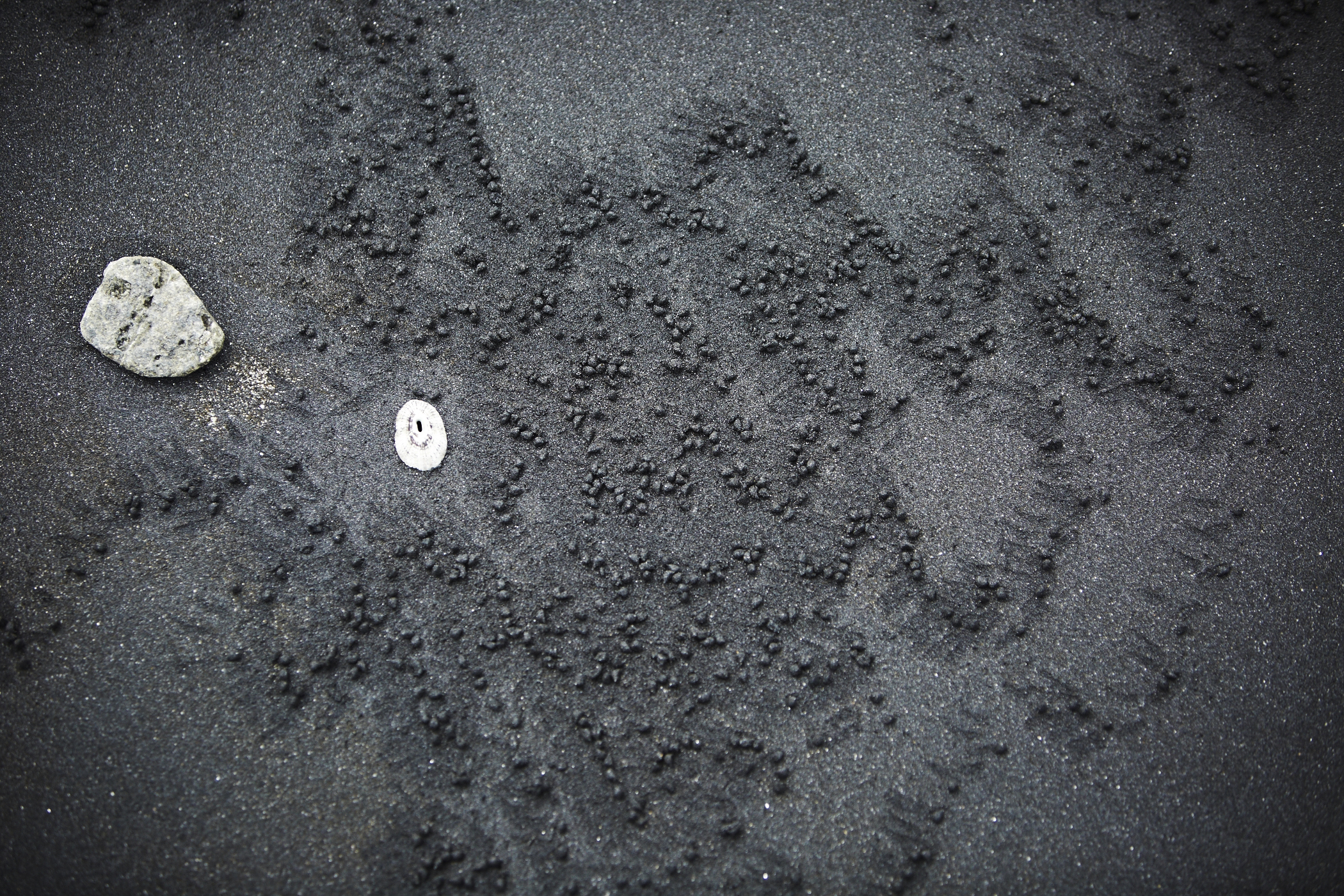
The One Who Came Back for Her
The One Who Came Back for Her
Something painful may have happened to us, but it doesn’t have to become our identity.
I’ve been thinking a lot lately about what it really means to heal.
So much of healing seems to ask us to hold two truths at the same time.
The first is that sometimes really shitty things happen to us.
Things we didn’t deserve. Things we didn’t choose. Things that may have happened when we were far too young to understand them, let alone protect ourselves from them.
We don’t need to minimize those experiences, put a positive spin on them, or pretend they didn’t hurt in order to heal.
But there’s another truth I’ve been learning to hold alongside that one:
What happened to me was not my fault. But my healing belongs to me now.
Not as another burden to carry.
Not because I should be “over it” by now.
Not because healing has a timeline.
And certainly not because what happened was somehow okay.
But, because I don’t want the people or experiences that hurt me to have the power to determine how I experience the rest of my life.
For me, that realization has become an act of self-love.
When the Wound Becomes the Story
As children, we don’t always have the ability to understand that the painful things happening around us aren’t because of us.
Sometimes we carry those experiences forward as shame, guilt, fear, or a quiet belief that there must have been something wrong with us.
Maybe if I had been different.
Quieter.
Better.
Easier.
More lovable.
Maybe things would have been different.
But there wasn’t something wrong with us.
We were children trying to make sense of things we weren’t equipped to understand.
And sometimes those childhood beliefs follow us into adulthood without us even realizing they’re there.
I’m not safe.
I’m not enough.
I’m too much.
People leave.
I can’t trust anyone.
Something must be wrong with me.
Those beliefs can begin to feel like truths when we’ve carried them long enough.
But what if they’re not truths?
What if they’re wounds asking to be tended to?
For a long time, I thought healing meant understanding what happened.
Why did this person do that?
Why did I react the way I did?
Why am I still affected by something that happened decades ago?
Understanding our past can be incredibly valuable.
But I’ve discovered there is a difference between understanding our past and continuing to live inside of it.
At some point, I began asking a different question.
Instead of only asking Why did this happen?
I began asking:
What does the part of me that is still hurting need from me now?
Meeting My Little Girl
Inner child work has become one of the ways I’ve explored that question.
During my own healing, I found myself connecting with a very young version of myself—a little girl who had experienced things she couldn’t possibly understand at the time.
Instead of analyzing what had happened to her, I tried something different.
I went to her.
I saw her.
And I asked her what she needed from me.
Her answer broke my heart.
Please take me with you.
Don’t leave me here.
She didn’t need me to explain the past.
She didn’t need me to figure out why everything had happened.
She needed someone to come back for her.
So in my mind, I scooped that little girl into my arms.
I told her:
I’ve got you.
You’re safe with me.
I’m taking you with me.
You never have to stay here again.
And I didn’t do this just once.
I’ve returned to her.
In different memories.
Different moments.
Different versions of the story.
I’ve talked to her.
I’ve held her.
I’ve reassured her.
I’ve asked her what she needed.
Sometimes I’ve imagined taking her somewhere beautiful and safe.
Sometimes there weren’t words at all.
I simply stayed.
And something extraordinary has happened over time.
She believes me now.
After all these years, that little girl is beginning to trust that I won’t abandon her.
She knows I’m coming back.
She knows I will listen.
She knows I’ll protect her.
And perhaps most importantly, she’s beginning to understand that she can finally rest.
Taking Loving Responsibility for Ourselves
This is where self-compassion and personal responsibility have begun to coexist for me.
Perhaps part of healing is learning to hold two truths at once:
What happened to me was not my fault.
And my healing belongs to me now.
The first truth offers compassion to the person I was then.
The second gives power back to the person I am today.
Taking responsibility for my healing doesn’t mean taking responsibility for what happened to me.
It means taking loving responsibility for myself now.
It means loving myself enough to tend to what still hurts.
Not because I should have healed it already.
Not because I’m doing something wrong if it still hurts.
But because I deserve to experience a life that is no longer quietly shaped by something I never chose in the first place.
Maybe moving beyond a victim identity isn’t about denying that we were ever victimized.
Maybe it’s about slowly loosening the shame, fear, guilt, and beliefs that became attached to what happened.
It’s being able to say:
Something painful happened to me. But what happened to me is not the entirety of who I am.
Healing Doesn’t Always Feel Like Healing
There are so many ways we can begin tending to ourselves.
Therapy.
Journaling.
Breathwork.
Movement.
Nature.
Somatic practices.
Spiritual practices.
Sometimes it’s simply learning how to sit compassionately beside ourselves instead of immediately trying to make an uncomfortable feeling disappear.
I’ve learned through my own journey that healing doesn’t always feel peaceful in the beginning.
Sometimes it asks us to gently feel what we’ve spent years trying not to feel.
It asks us to sit beside the frightened child, the brokenhearted woman, the version of ourselves who didn’t know what to do next—and instead of abandoning her, fixing her, or telling her she should be over it by now, simply say:
I’m here.
I’ve got you.
You don’t have to do this alone anymore.
On the other side of that tenderness, we often discover something unexpected:
More space.
More compassion.
More trust.
And a deeper sense of home within ourselves.
Maybe that’s what coming home to ourselves really looks like.
Not denying our wounds.
Not allowing them to define us.
But turning toward the parts of ourselves we’ve spent years running from and saying:
I see you.
I believe you.
I’m here now.
And I’m not leaving you behind.
Because healing isn’t about erasing the child you once were.
It’s about becoming the person she can finally rest with.
Before You Go…
Take one slow breath.
Notice how you’re feeling.
Place a hand over your heart.
Whatever this reflection stirred within you today, you don’t have to figure it all out right now.
Simply stay curious.
Notice.
Allow.
And perhaps ask yourself one gentle question:
What does the younger part of me need from me today?
You don’t have to force an answer.
Just listen.
And if you’d like a gentle place to continue the journey, I’d love to share a gift with you.
Coming Home to Yourself
A Seven-Day Journey of Gentle Reflections for Remembering Who You’ve Always Been.
[Receive Your Gift] - Coming soon!
A Little Love Note Before You Go
You were never meant to spend the rest of your life proving that you deserved what you needed all along.
You are allowed to become the safe place within yourself that you’ve been searching for.
And you don’t have to get there all at once.
One breath.
One moment.
One loving return at a time.
With love,
Lisa Michele
If you found your way here...welcome
I’m glad you’re here.
I’ve always loved meaningful conversations.
The kind where you leave feeling a little lighter.
A little more understood.
Or simply reminded that you’re not alone.
That’s what I hope this little corner of the internet becomes.
Not a place where someone has all the answers.
But a place where we can wonder together.
Because I’ve learned that life is always whispering to us.
Sometimes through heartbreak.
Sometimes through butterflies.
Sometimes through the quiet stillness of nature.
Sometimes through laughter.
Sometimes through tears.
And sometimes through that gentle voice within that quietly asks,
“What if there’s another way?”
Life has humbled me.
It has stretched my faith, softened my heart, and invited me to become someone I never imagined I’d be.
Along the way, I’ve discovered that healing isn’t about becoming someone new.
It’s about remembering who we were before fear, trauma, loss, and life’s experiences convinced us we had to be someone else.
This blog is simply a collection of the treasures I’ve gathered along that journey.
Stories.
Reflections.
Lessons from nature.
Nervous system tools.
Moments of beauty.
Gentle reminders to slow down.
To breathe.
To reconnect with ourselves.
I don’t claim to be an expert, and I certainly don’t have life all figured out.
I’m simply someone who has walked through difficult seasons, continues to learn every day, and wants to share the golden nuggets I’ve found along the way.
If something here encourages you, comforts you, makes you pause, or helps you feel a little more seen…
then this space has already fulfilled its purpose.
Thank you for being here.
May you always remember…
Stay curious.
Notice.
Allow.
With love,
Lisa Michele
Quisque iaculis facilisis lacinia. Mauris euismod pellentesque tellus sit amet mollis.